
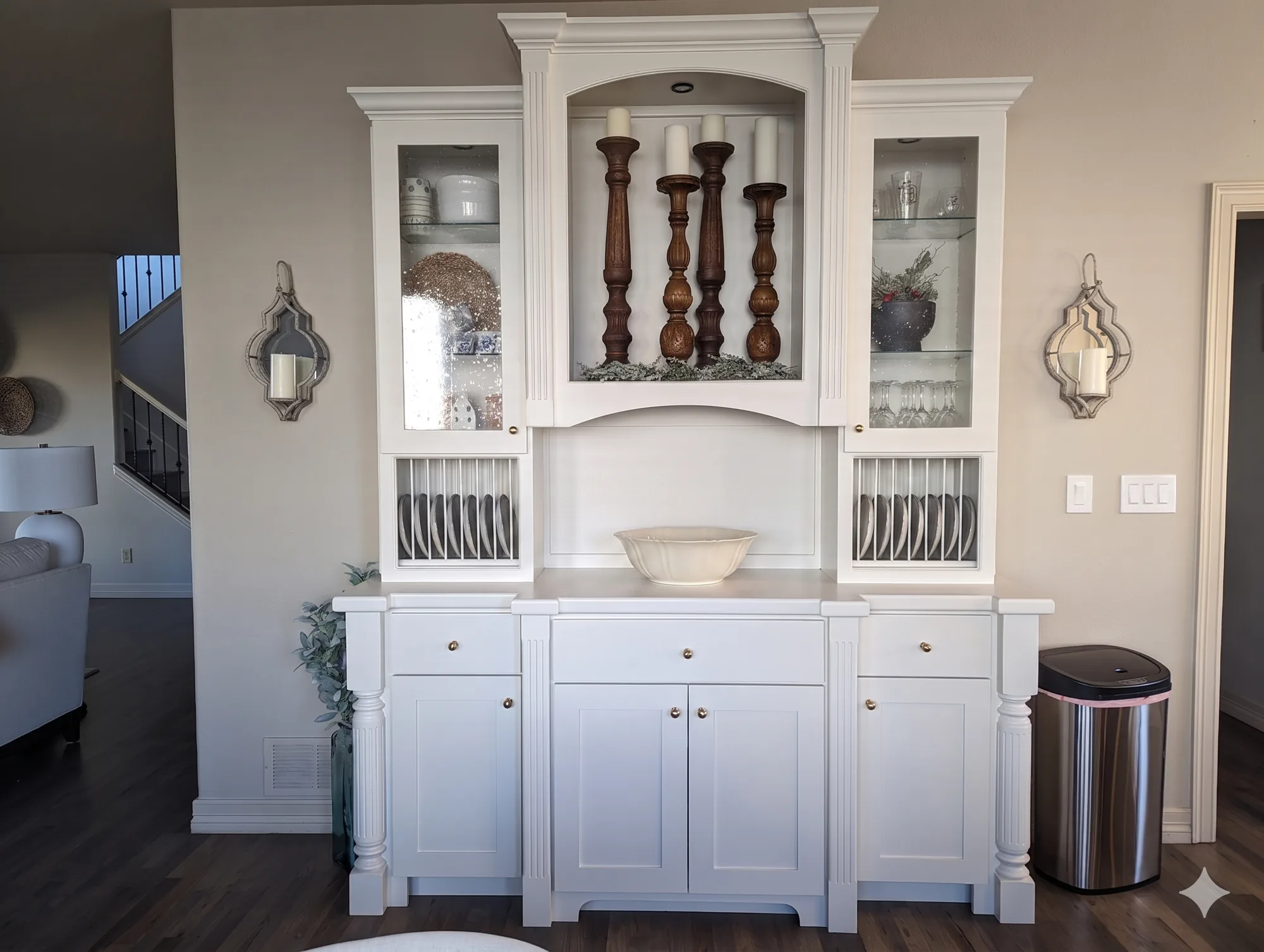
A finish spec that says “white paint” or “medium stain” reads fine on plans and causes trouble in production: the white has no sheen, the stain has no species context, and the client signed off on neither. This guide covers what each system actually is, how woods behave under them, and how to write a spec that survives contact with a real kitchen.
Pigmented (painted) systems
A pigmented finish is opaque color — what plans usually call “painted cabinets,” though what we spray has little in common with wall paint. Cabinet-grade pigmented systems are catalyzed coatings: sprayed primer, sanded, then sprayed color coats that cure hard enough to live next to a dishwasher for twenty years.
Color matching. Spec a manufacturer color number (any major paint brand’s deck works), or give us a physical sample to match. “To match Sherwin-Williams Alabaster” is a spec; “white” is a conversation waiting to happen.
Sheen. Most cabinetry lands in matte through satin. Higher sheens read more formal and show surface prep honestly — which is fine on our prep, but spec it deliberately. Put the sheen in the spec; it changes the look as much as the color does.
Durability. Catalyzed pigmented finishes are the workhorse: hard-curing, cleanable, consistent across every door. One honest caveat — an opaque film shows an impact chip more visibly than a stained surface, simply because the wood under it is a different color. On painted finishes, spec touch-up kits for the punch list.
Species note. Pigment hides grain color but not grain texture. Oak telegraphs its open grain through a painted finish — some clients love that, most expecting “smooth white” don’t. For paint-grade work, maple and similar tight-grain species (or MDF panels) give the smoothest result. If the client wants painted oak without grain telegraph, that’s a grain-fill conversation and a price line, not a surprise.
Stained and clear systems
Stain-and-clear shows the wood: stain (or no stain) for tone, then catalyzed clear coats for protection. The species is half the spec:
- Oak takes stain evenly and predictably — its open grain is the look.
- Maple is blotch-prone under wiping stains; even tone on maple needs conditioner or spray-toning. If the plans say “maple, medium stain,” we need samples first, every time.
- Alder and cherry start warm and darken with light over time. The sample your client approves should come with that expectation set.
- Clear-only (natural) is still a finish system — clear coats also have sheen levels, and “natural maple, matte clear” looks different from “natural maple, satin clear.”
Durability of a modern catalyzed clear is comparable to pigmented systems, and stained surfaces are more forgiving of small dings — the color goes all the way through the wood.
Hybrid jobs
Two-tone schemes — painted perimeter with a stained island, or the reverse — are common and we run them as two systems on one order. Spec each element separately: species, system, color/stain, sheen, per element. That one habit prevents most cabinet-finish change orders we see.
What sheen and system actually look like
Three doors from our shop, same camera, no styling:
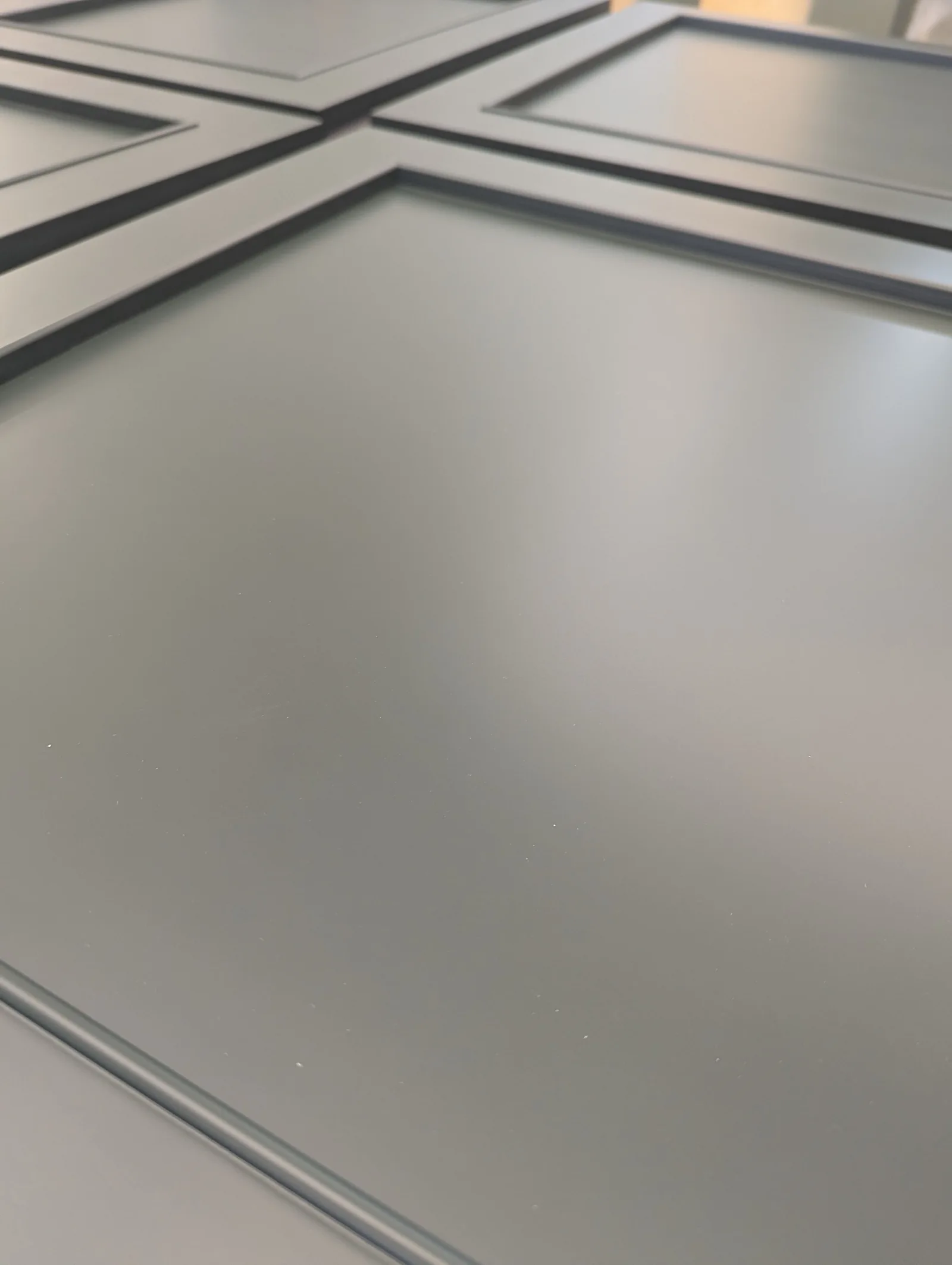
A 10-degree pigmented finish on maple — the “smooth painted” look most residential specs are reaching for.
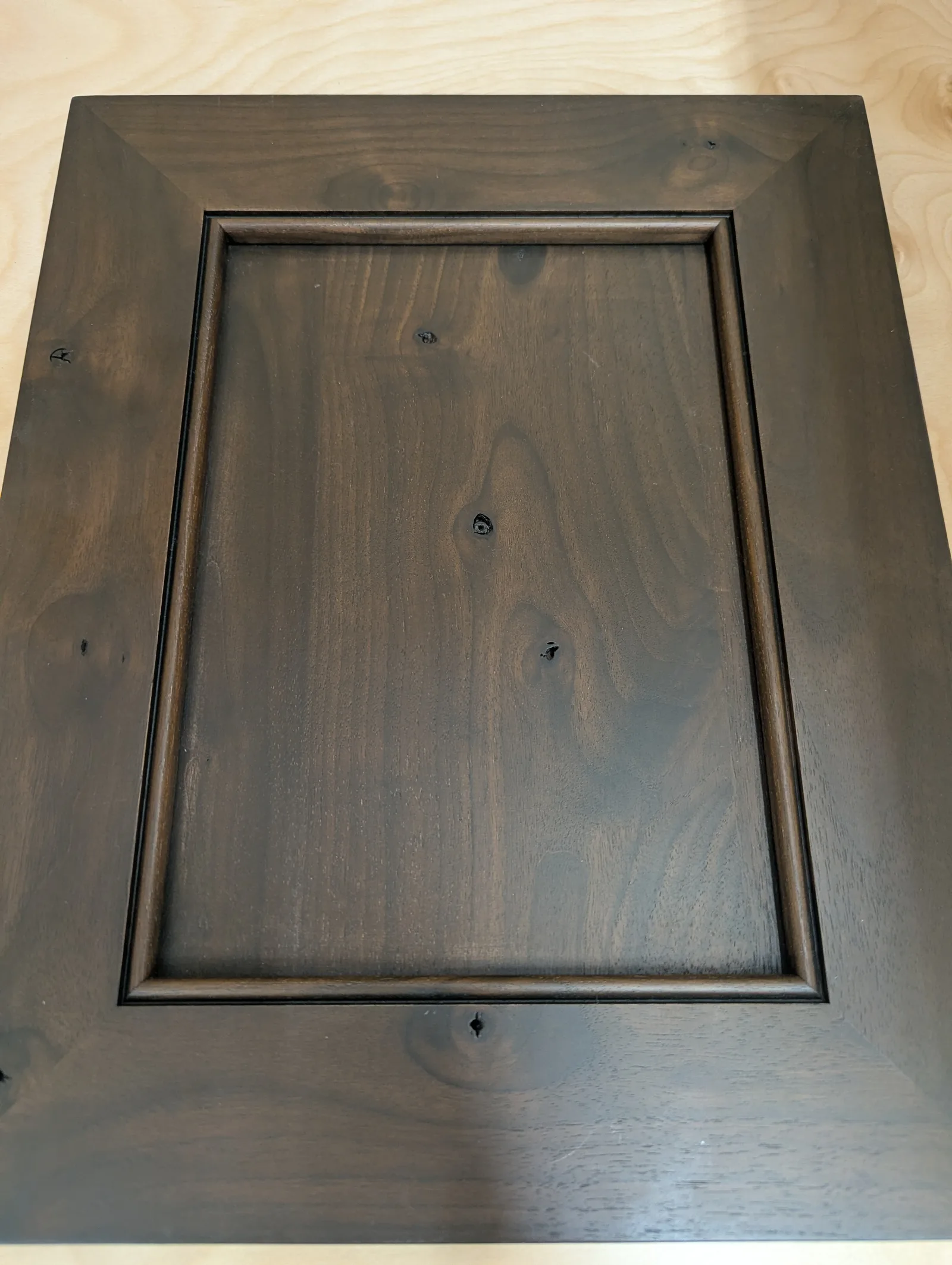
The same 10-degree sheen over stained walnut — here the grain is the look, and small dings will forgive.
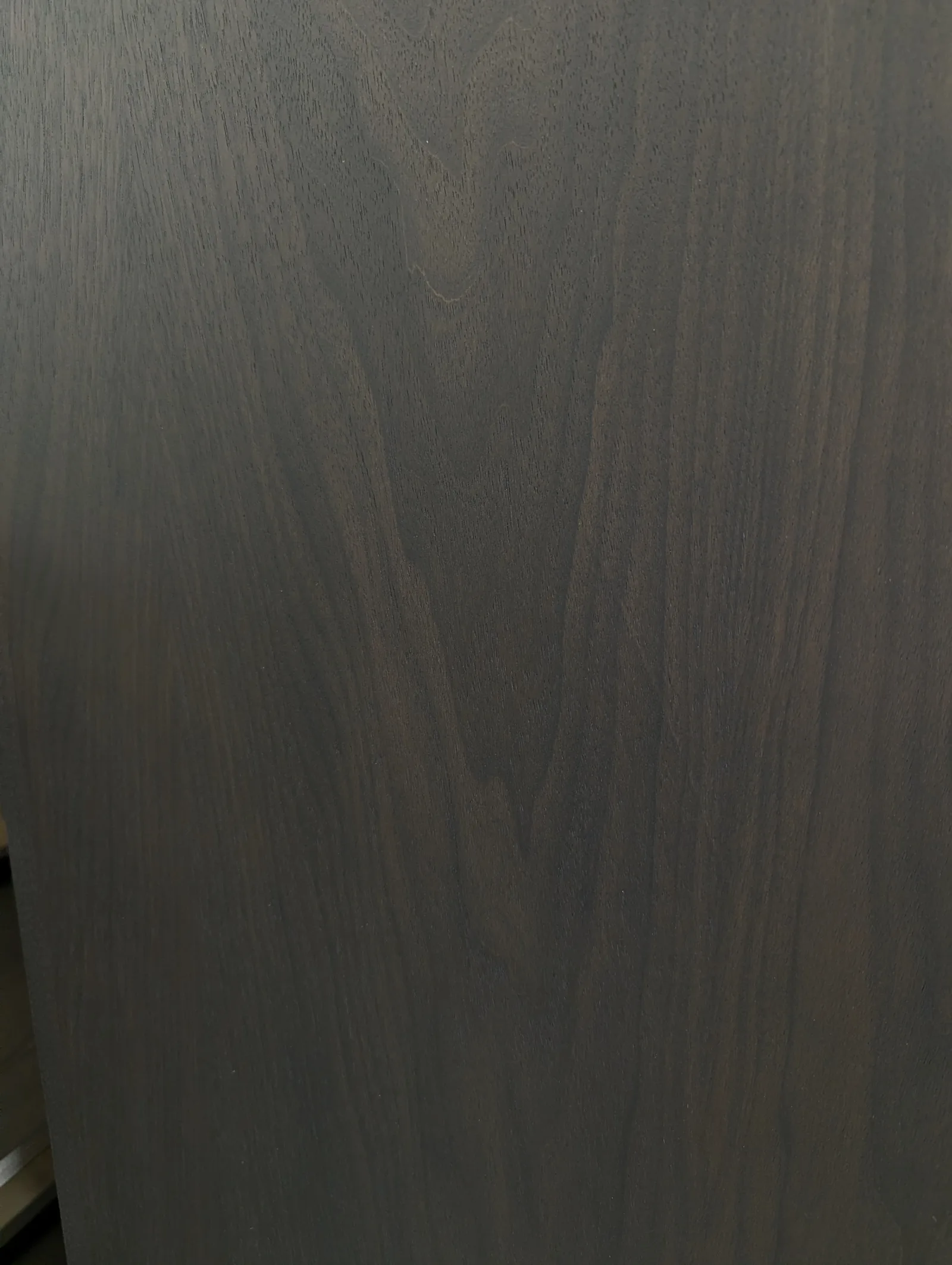
Drop to 5 degrees and the same stained surface reads flatter and more modern. This is why sheen belongs in the spec, not in a phone call.
How to write the spec
A finish spec we can build from, with no RFIs:
- System — pigmented or stained/clear, per element if mixed
- Color — manufacturer color number, or stain name on a named species
- Sheen — matte / satin / specific gloss level
- Species — what the doors actually are; it changes everything above
- Sample approval — who signs off, before spray
The sample program
Item 5 is where we can carry the load: order finish samples through the contractor portal — your exact color and sheen, sprayed on real material — and put the physical sample in your client’s hands for sign-off before a single door is sprayed. A sample board has killed every “that’s not the white I meant” conversation it’s ever been in.
Speccing a job now? Order samples through the portal, or send us the plans and we’ll help you write the finish schedule.