
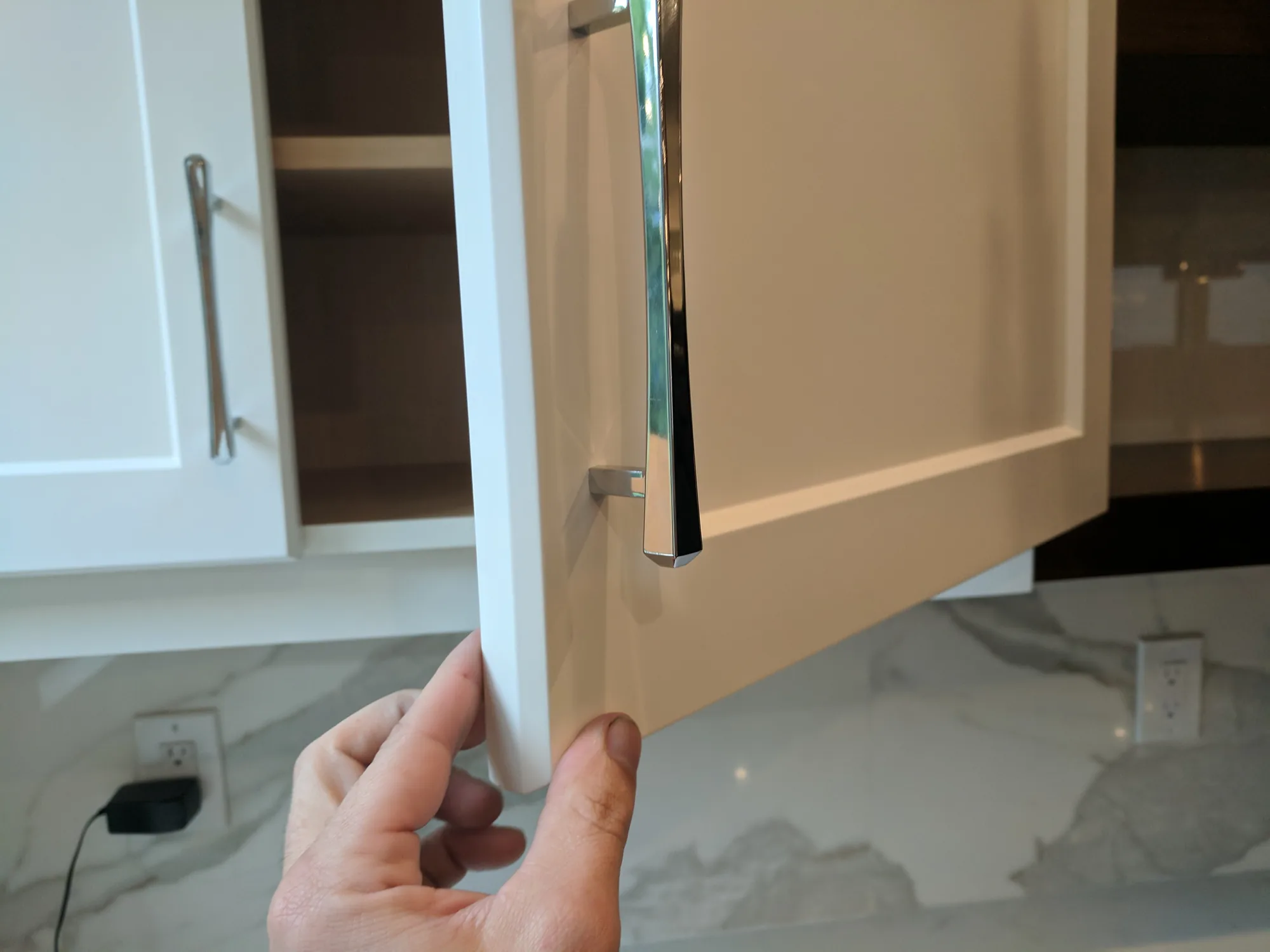
If you build or remodel in Northern Colorado, you’ve watched this scene before: a painter on the jobsite, doors laid across sawhorses, brushing or rolling finish in a space that’s also full of drywall dust, foot traffic, and a schedule that needed those doors hung yesterday. Sometimes it turns out fine. Often enough, it turns into the callback that eats the margin on the whole job.
We finish cabinets for a living — it’s all we do — and a lot of our work comes from contractors who decided they were done gambling on site finishes. Here’s the case, laid out the way we’d lay it out across a tailgate.
What site finishing actually costs you
The quoted price of having your painter finish doors on site is never the real price. The real price includes:
Dust in the finish. A jobsite is the worst possible spray environment. Drywall sanding, subfloor traffic, open framing — airborne contamination ends up in the topcoat, and the result reads “painted” instead of “factory.”
Overspray risk. Masking a finished space well enough to spray in it takes hours, and one miss costs more than the doors.
Schedule hostage-taking. Brushed and rolled coatings need recoat windows and cure time, and cold snaps or humidity swings stretch both. Your trades stack up behind a finish that isn’t dry.
Callbacks. Site-applied finishes — especially brushed latex on cabinet doors — chip, block (stick to the frame), and wear at the handle area far sooner than a sprayed catalyzed finish. The callback comes to you, not the painter.
What changes with a shop finish
In our Loveland shop, doors and drawer fronts are finished in a controlled environment: proper prep and sanding, sprayed primer, sprayed color or clear systems, and racked drying out of the dust. Frames can be sprayed on site with real masking and containment, or matched to the doors if you’re handling boxes another way.
The difference isn’t subtle. A sprayed, catalyzed finish lays down flat, cures hard, and matches from the first door to the fiftieth. It’s the finish your client thinks they’re buying when the plans say “painted cabinets.”
How the workflow works
We built the process around not wasting your crew’s time:
- Drop off doors and drawer fronts at our shop. We check in and label every piece against your order, so what arrives is what returns.
- We finish them to spec — pigmented or stained, your color or ours, with a posted turnaround you can see when you order.
- Pick up when we notify you, rehang, and move on. Your punch list gets shorter instead of longer.
You can place and track orders through our contractor portal, which shows pricing up front, lets you schedule drop-off and pick-up dates around your build schedule, and keeps a history of every order so reorders and remakes take a minute instead of a phone call.
What your crew does instead
The honest math isn’t “outsourced finishing vs. free labor” — your painter’s time was never free. It’s “what does a finishing week cost me in crew hours, schedule risk, and callback exposure, versus a line item I can price into the bid.” Contractors who make the switch tell us the bid math was the easy part; the part they didn’t expect was getting their schedule back.
Where we work
The shop is in Loveland, and we regularly handle work from Fort Collins, Greeley, Boulder, and the wider Front Range. If you’re driving doors past us to somewhere else, we should talk.
Ready to price a job? Create a contractor account and you’ll see the full catalogue with pricing, or get in touch and we’ll walk you through how the first order works.